How to Compare the Market and Save Smarter in Australia


If you want to properly compare the market in Australia, you need to think beyond just one type of tool. Smart shoppers today are using a combination of two powerful resources: price-comparison sites for big-ticket items like insurance, and cashback platforms for getting money back on everyday shopping. The real trick to maximising your savings is knowing when to use each one.
Why You Need More Than One Savings Tool
With the cost of living on everyone's mind, we're all looking for ways to make our money go further. But just using one type of savings website means you're almost certainly leaving cash on the table. A truly effective approach involves a double-play strategy, matching the right platform to the right purchase.
This guide will walk you through mastering this approach. We'll break down how to use traditional comparison websites alongside cashback platforms so you can squeeze the most value out of every single dollar you spend.
Knowing What's in Your Savings Toolkit
Think about your savings strategy like a physical toolkit. You wouldn't try to saw a piece of wood with a screwdriver, right? The same logic applies here. The best tool for the job depends entirely on what you're buying.
Every Aussie shopper should have these two tools ready to go:
- Price-Comparison Websites: These are perfect for those big, less frequent purchases. They do the heavy lifting of comparing complex products like insurance policies, home loans, or energy plans to find you the lowest upfront cost.
- Cashback Platforms: This is your secret weapon for all the regular shopping you do. Instead of a discount at the checkout, you get a percentage of what you spent paid back to you as real cash. It’s a brilliant way to build up savings over time.
The key difference is how you save. One lowers your initial cost, while the other puts money back in your pocket after the fact.
| Feature | Price-Comparison Sites | Cashback Platforms |
|---|---|---|
| Best For | Insurance, utilities, loans, travel | Everyday retail, tech, fashion, food |
| Savings Type | Upfront discount or lower premium | Earned cash paid out later |
| Purchase Frequency | Infrequent, high-value | Frequent, everyday spending |
| Example Use Case | Finding the cheapest car insurance | Earning 5% back on a new laptop |
The Power of Using Both
Using a site like Compare the Market is fantastic for locking in a great deal on your car insurance. But it's not going to help you when you're buying a new outfit from THE ICONIC or grabbing a new toaster from The Good Guys. That's where a cashback platform shines.
The most switched-on shoppers get this. They use comparison sites to hammer down their major annual bills and then use cashback platforms to constantly earn money back from their weekly and monthly spending. It’s a complete savings ecosystem.
By building both into your shopping routine, you create a powerful, all-encompassing savings strategy. Let’s dive into how each platform works, what they’re best for, and how you can combine them in real life to make sure you never overpay.
How Price Comparison Websites Actually Work
Price comparison websites are built to cut through the noise of complex purchases, particularly for those essential services we all need. Platforms like Compare the Market act as a central hub, pulling in offers from a massive range of providers across insurance, utilities, and financial products. Think of them as a digital broker or a specialised middleman.
You simply punch in your details—say, your car model for an insurance quote or your household size for an energy plan. The site's technology then does the legwork, polling its network of partners and serving you a list of quotes. This means you can compare the market from a single screen instead of spending hours trawling through dozens of different provider websites.
The Business Model Unpacked
So, how do they make money? It’s all based on lead generation. When you find a deal and click through to sign up for a service, the comparison site typically earns a commission or a referral fee from that provider. The beauty of this is that the service is free for you, the consumer, as the providers are the ones paying to acquire a new customer.
This setup often works out well for everyone. You get a quick, convenient way to find a competitive deal, and the service providers get a direct line to a big pool of customers who are ready to make a purchase.
The real power of a price comparison site is its knack for turning dense, jargon-filled policies into a simple, side-by-side view. It gives you the clarity to make a smart choice fast, potentially saving you hundreds on your annual bills.
It's worth keeping in mind, however, that these sites aren't showing you everything. The results are pulled from a panel of commercial partners, which means some providers—especially smaller or newer players—might not be on the list.
Strengths and Ideal Use Cases
Price comparison websites truly come into their own for products that are fairly standardised but loaded with confusing variables. They are the perfect tool for those big, infrequent purchases that have long-term financial consequences.
Here's where they really shine:
- Insurance Policies: This is their bread and butter. Comparing car, home, health, or travel insurance is a breeze when you can see different excess levels, coverage limits, and policy extras all in one place.
- Utility Providers: Switching your electricity, gas, or internet provider can lead to some serious savings. These platforms make it incredibly simple to weigh up different plans and snag the best introductory offers.
- Financial Products: From home loans and credit cards to personal loans, trying to compare interest rates, fees, and features on your own can be a headache. These sites do the heavy lifting for you.
This kind of smart shopping is more relevant than ever as Australian households feel the pinch of rising costs. In the competitive world of Australian online shopping, sites like Compare the Market have completely changed how we hunt for deals. A Household Budget Barometer Report, which surveyed over 3,000 Australians, found that grocery spending has shot up nationwide. This highlights the cost-of-living pressures pushing more families to compare prices smartly, with recent data showing a surge in comparisons for car insurance, home cover, and electricity plans. You can read more about these consumer trends to get the full picture.
Understanding the Limitations
While these platforms are incredibly handy, they aren't the solution for every single purchase. Their focus is almost entirely on the upfront cost, which can sometimes mask the true long-term value. For example, the cheapest insurance policy might come with a sky-high excess or critical exclusions that could cost you a lot more down the track.
On top of that, they're not built for everyday retail shopping. You wouldn't use a comparison site to buy a new pair of shoes, book a table at a restaurant, or do your weekly grocery shop. Their specialisation is both their biggest strength and their most important limitation.
Knowing this helps you decide when to use them and when another tool, like a cashback platform, is a better fit. To learn more, check out our guide on how cashback platforms work. Making this distinction is the key to building a truly effective savings strategy.
Getting Money Back with Every Shop: The Power of Cashback
Price comparison sites are fantastic for slashing the cost of big, one-off purchases, but there’s another tool changing the game for everyday Aussie shoppers: cashback platforms. It’s a completely different way to compare the market and save money.
Instead of giving you a discount upfront, platforms like Cashback Australia reward you with real cash back on things you were going to buy anyway. The idea is simple. You find your favourite store on the platform, click their link to go to the store's website, and do your shopping as usual. In the background, the platform gets a commission for sending you there, and they share a slice of it with you.
This simple process turns your regular spending into a powerful savings habit. It's not about finding a single bargain; it's about building up real savings over time from hundreds of retailers you already know and love.
How Cashback Turns Your Daily Spend into Savings
The real magic of cashback is its sheer scope. These platforms have built huge networks of partner brands, which means you can get money back on just about anything you can think of. From your weekly grocery run to booking a holiday, almost every purchase is an opportunity to save.
Just think about your usual spending:
- Fashion and Apparel: Grabbing new runners from adidas or doing a wardrobe refresh at Cotton On.
- Technology and Appliances: Finally upgrading the telly at The Good Guys or buying a new laptop from Bing Lee.
- Travel and Holidays: Locking in a hotel through Booking.com or finding cheap flights on Expedia.
- Household Essentials: Stocking up on pet food from Petbarn or ordering a Friday night pizza.
Every single one of these moments can put a little extra cash back in your pocket. It’s a smart, sustainable way to make your money work harder for you, without having to change where or how you shop.
The key takeaway here is that cashback isn't just a discount—it's more like an earning. You're not just spending less; you're actively getting a portion of your spend back, which creates a positive cycle of saving.
This mindset of turning smart shopping into a financial return isn't new. For everyday Aussies, comparing cashback offers is a bit like managing investments. You pick the best deals from hundreds of stores on Cashback Australia, much like companies capitalise on market demand. For families and savvy shoppers, the connection is clear—solid financial habits can help fund purchases at stores like Cotton On or Bing Lee, where the approved cashback credits feel like a welcome bonus. Cashback Australia provides clear, tracked rewards on everything from Expedia bookings to Petbarn hauls, helping you stretch every dollar in a competitive market. You can explore more about Australia's stock market performance and trends to see how these principles apply on a larger scale.
How Earning Cash Back Actually Works
The whole system is designed to be incredibly easy. You sign up for a free account, browse the deals, and click through to the retailer you want. A cookie tracks your purchase, and once the store confirms you haven't returned your items, the cashback gets added to your account.
Once you’ve saved up a certain amount—for example, $11 with Cashback Australia—you can pull that money out and send it straight to your bank or PayPal account. Your digital earnings become real cash to spend on whatever you want. It’s a clever system that turns your shopping habits into a direct financial reward.
Of course, not all cashback platforms are created equal. It pays to understand the differences. For a detailed breakdown, have a look at our guide comparing Cashback Australia and Cashrewards to see how the features and offers stack up. This will help you pick the platform that’s the best fit for the way you shop.
Comparing Price Comparison and Cashback Platforms
Trying to decide between a price comparison site and a cashback platform? It's not really about picking one over the other. They're built for completely different jobs. If you want to properly compare the market, you need to think about what you’re trying to achieve with your shopping.
One tool is designed to land you an immediate discount on a big, one-off purchase. The other is all about generating a consistent stream of savings from all your regular spending. Understanding this is key to building a smart savings plan that covers everything from your annual car insurance renewal to your next online shopping spree.
Let's dig into what sets them apart so you can pick the right tool for the job, every single time.
What Are You Actually Buying?
The first and most important question is: what’s in your shopping cart? The answer will almost always tell you which platform to use.
Price comparison websites really shine when you're dealing with complex services and contracts. These are typically things you only buy once a year, or even less often.
- Insurance: Think car, home, health, and travel policies.
- Utilities: Great for finding better deals on electricity, gas, and NBN plans.
- Financial Products: The go-to for home loans, personal loans, and credit cards.
These sites are experts at cutting through the confusing jargon and laying out simple, side-by-side quotes, helping you lock in the lowest price right from the start.
Cashback platforms, on the other hand, are made for everyday retail and services. Their real power lies in the sheer number of retail partners they have, covering just about everything else you could possibly spend money on.
- Fashion and Accessories: From major department stores to niche online boutiques.
- Electronics and Appliances: Laptops, TVs, kitchen gadgets—you name it.
- Travel and Accommodation: Flights, hotels, and holiday packages.
- Food and Groceries: Perfect for your online supermarket shops and takeaway nights.
Basically, if you're buying a physical product or booking a service from a retailer, a cashback platform is your best friend.
Upfront Discount vs. Earning Cash Back
The way you actually get your savings is another massive point of difference. A price comparison site helps you pay less on the spot. The saving is instant—the insurance premium you see is the one you pay, and it’s cheaper than it would have been otherwise.
Cashback platforms operate on a different model: you earn back a percentage of what you’ve already paid. You pay the full price at the checkout, and a chunk of that money is credited back to your account later, once the retailer gives the purchase the green light.
This isn't just a small detail; it's a completely different way of thinking about savings. Price comparison is about hunting for the single cheapest deal right now. Cashback is about turning your ongoing spending into a reliable source of future earnings.
For instance, saving $150 on your yearly car insurance is a fantastic one-off win. But earning 3-5% cashback on dozens of smaller buys throughout the year can easily add up to a much bigger saving over the long run. To see how it all works, you can find out more about how to maximise your cashback earnings on our site.
This flowchart breaks down just how simple the cashback process is.
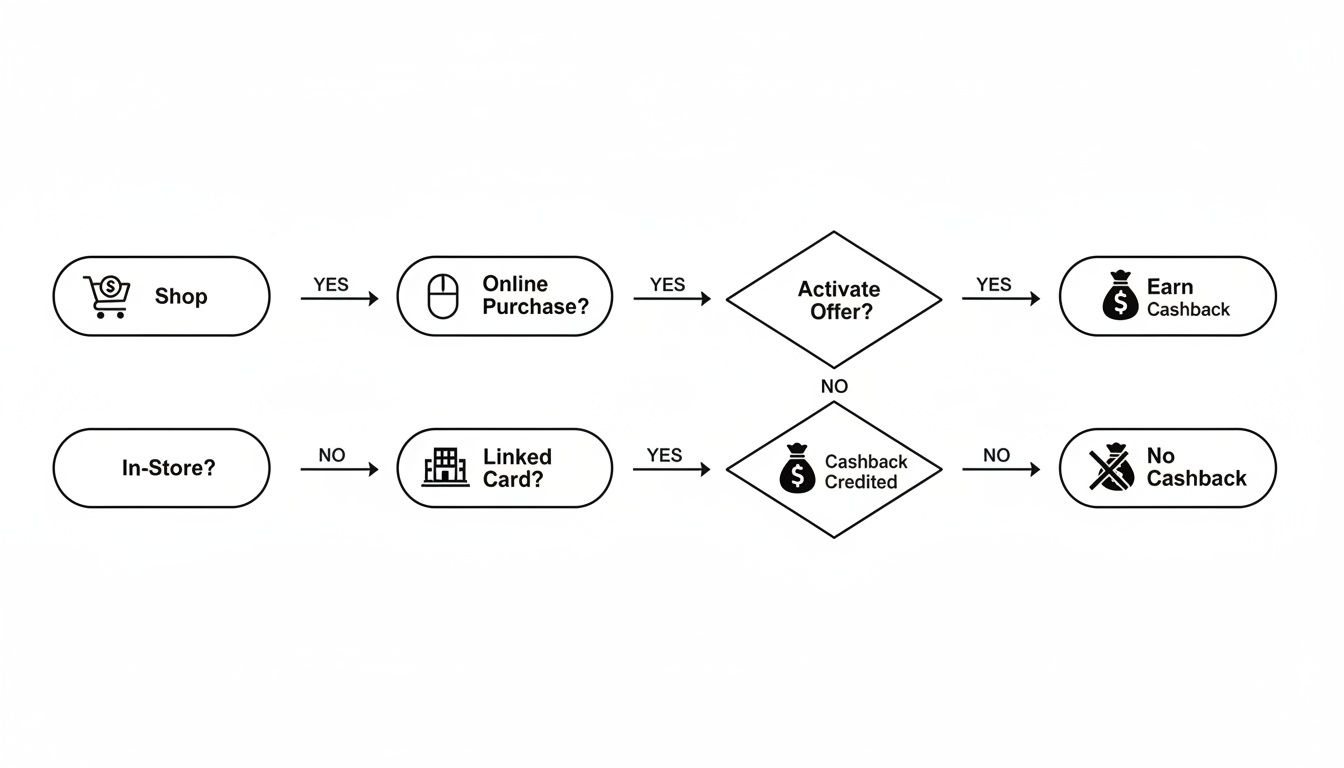
As you can see, it's a simple three-step loop that rewards you for the shopping you were going to do anyway.
User Experience and Getting It Right
The journey on each platform is built for its specific purpose. Price comparison sites will often ask you to fill out pretty detailed forms to get accurate quotes. It can feel a bit data-heavy, but it's essential for comparing complex products fairly.
Cashback platforms offer a much more streamlined experience. You just find the store you want, click a link, and then shop on their site as you normally would. The only technical bit is the tracking that logs your purchase. To make sure it works every time, it's crucial to disable any ad-blockers and always start your shopping journey from the cashback platform.
To pull it all together, here’s a quick table to show you the main differences at a glance.
Platform Comparison: Price Comparison Sites vs. Cashback Australia
Here’s a feature-by-feature breakdown that compares the core functions and typical uses for both types of platforms.
| Feature | Price Comparison Sites (e.g., Compare the Market) | Cashback Australia |
|---|---|---|
| Primary Use | Comparing complex services like insurance & utilities. | Earning money back on everyday retail purchases. |
| Savings Method | Finds the lowest upfront price or premium. | A percentage of your spend is paid back to you as cash. |
| When You Save | Immediately, at the point of purchase. | After the purchase is confirmed by the retailer. |
| Purchase Type | High-value, infrequent (annual or every few years). | Frequent, everyday spending (weekly or monthly). |
| Example | Saving $200 on your annual home insurance policy. | Earning $35 cashback on a $500 purchase from The Good Guys. |
In the end, these platforms aren't really competitors. They're complementary tools in your savings kit. The savviest shoppers in Australia understand this and use both. They use price comparison sites to slash their biggest household bills, then use cashback platforms to constantly earn back money on everything else. It’s a powerful, two-pronged approach to saving money.
Real-World Scenarios: How to Stack Your Savings
Knowing the theory is one thing, but actually putting money back in your pocket is what counts. To really get the hang of how to compare the market and maximise your returns, let’s walk through a few common situations Aussie shoppers find themselves in. These examples show how a smart combination of price comparison sites and cashback platforms can lead to some serious savings.
For each scenario, we’ll map out a step-by-step strategy. This isn’t just about picking one platform over the other; it’s about knowing when to use each tool—and how to use them together—to get the best possible outcome.
Scenario 1: The Annual Insurance Renewal
It’s that time of year again. The home and contents insurance renewal notice has landed in your inbox, and surprise, the premium has shot up. You want the best coverage without being taken for a ride, making this a perfect job for a two-step savings strategy.
Step 1: Start on a Price Comparison Site
First things first, head straight to a price comparison website. Here, you can plug in your policy details and get a bunch of quotes from different insurers in minutes. This instantly tells you whether your renewal offer is competitive and shines a light on other providers who might offer a better deal for the same level of cover. You could easily find a policy that saves you $250 right off the bat.
Step 2: Layer on the Cashback
Before you sign on the dotted line, do a quick check to see if your chosen insurer has a deal with a cashback platform. While it’s less common for insurance, some providers offer a nice fixed-dollar cashback bonus for new customers. If you find one, simply click through the cashback site before buying the policy. It’s an easy way to pocket an extra $50.
Scenario 2: The Back-to-School Shopping Spree
It’s January, and a parent is staring down a long list of back-to-school gear: new uniforms, shoes, a mountain of stationery, and the big one—a new laptop. This is a classic retail-heavy shop, which means a cashback platform should be your go-to tool.
The Strategy: Funnel Everything Through Cashback
With purchases spanning so many different retail categories, this is the perfect opportunity to make your cashback account work overtime. The game plan is simple:
- Uniforms & Shoes: Buy from retailers like Cotton On or adidas through your cashback platform to get a percentage back on the total spend.
- Stationery: Grab all the pens, exercise books, and folders from an office supply store or a major department store that’s partnered with your cashback site.
- Laptop: This is the big-ticket item. Purchasing a new laptop from a retailer like The Good Guys or Bing Lee via a cashback portal can result in a significant reward—think $40 or more back on just this one item.
By funnelling every single back-to-school purchase through a cashback platform, a major expense is turned into a major savings opportunity. The small percentages from each shop really add up.
Scenario 3: Planning the Perfect Holiday
A couple is organising a well-deserved trip to Queensland. They need to book flights, find accommodation, hire a car, and lock in travel insurance. This kind of multi-part purchase is where a clever mix of both platform types delivers the best value.
A Combined Approach for Maximum Savings:
- Secure the Essentials First: They should start on a price comparison site to find the most affordable and comprehensive travel insurance. Insurance is a complex product, so getting the best upfront price is key.
- Switch to Cashback for Bookings: With insurance sorted, they can pivot to a cashback platform like Cashback Australia. From here, they can book flights, find hotels through partners like Booking.com or Expedia, and even arrange the rental car. Earning a percentage back on these big-ticket items can lead to massive savings, often over $100 on a week-long getaway.
This hybrid approach ensures they get the lowest initial cost on their insurance while earning cash back on the most expensive parts of their holiday. It’s a perfect example of making these tools work together. For a closer look at how it all works, you can learn more about how to compare the market with cashback offers right here on our site.
Your 2-Step Checklist for Smarter Shopping
Let's be honest, navigating the world of online savings can feel a bit much sometimes. But getting the best value doesn't need to be complicated. All it takes is a quick mental checklist to run through before you hit 'buy'. Think of this as your back-pocket guide to comparing the market and picking the right tool for the job, every time.
Bookmark this page and make these questions a habit. Whether you're sorting out your car insurance or just doing the weekly grocery shop online, a few seconds of thought can make a huge difference to your wallet.
First, Ask: What Am I Actually Buying?
The type of purchase you're making is the biggest clue as to where you should start. It sounds simple, but this first question cuts through the noise straight away.
Is it a one-off service or a physical product? If you're looking at complex financial products like insurance, home loans, or a new energy plan, a price comparison website is definitely your first port of call. For almost everything else—clothes, tech, travel, you name it—a cashback platform is where you'll find the real value.
How often will I buy this? For those big, infrequent purchases like an annual insurance policy, your main goal is locking in the lowest possible price upfront. That’s comparison site territory. But for regular, everyday spending, the focus should shift to earning consistent rewards over time, which is exactly what cashback sites are built for.
Just by answering that, you’ve already pointed yourself in the right direction and saved a heap of time.
Second, Ask: How Am I Getting the Savings?
This is where you need to get clear on the mechanics. How you save directly affects your budget and cash flow, so it’s crucial to know what you're signing up for.
The real difference here isn't just about how much you save. It's about when and how that money comes back to you. One gives you an instant win at the checkout, while the other helps you build up a savings pot you can cash out later.
Before you commit, ask yourself:
Is this an upfront discount or cash I get back later? A price comparison site helps you find a deal that lowers the amount you pay right now. A cashback platform means you pay the full price today, and a portion of that spend is credited back to your account down the track.
What are the catches? With cashback, always check the retailer’s confirmation time and the platform's minimum payout amount. For insurance or a loan, look past the headline price. What’s the excess? Are there weird exclusions or coverage limits? The cheapest deal isn't always the best one.
Running through this simple, two-part checklist will help you confidently pick the right platform for any purchase. It’s a strategic way to make sure you’re not just saving money, but saving smarter with every single transaction.
Got Questions? We've Got Answers
Stepping into the world of online savings can feel a bit like learning a new language. You've got questions, and we've got straightforward answers to help you get the most out of every dollar you spend.
Let's clear up some of the common queries that pop up when you're using price-comparison and cashback sites.
Are These Platforms Safe to Use?
Absolutely, as long as you stick to well-known, reputable sites. A good price comparison platform, like Compare the Market, is essentially a search engine; it gathers quotes for you but sends you directly to the provider (like an insurer or energy company) to complete the purchase.
Cashback sites work a little differently. They use secure tracking links and cookies to confirm your purchase with the retailer, which is how they credit the cash to your account. The golden rule is always the same: double-check you're on the official site before you hand over any personal information.
How Can I Be Sure My Cashback Has Tracked?
This is the most critical part of earning cashback. The key is to start your shopping trip by clicking the link on the cashback platform first. Don't go to the retailer's site and then try to activate the offer later.
Another huge culprit for tracking issues? Ad-blockers. They often interfere with the very cookies needed to log your purchase. Before you start shopping, it's a great idea to temporarily disable your ad-blocker to make sure everything tracks smoothly. You should see the transaction pop up as "pending" in your account anywhere from a few hours to a couple of days later.
The number one reason for a missing cashback claim is an ad-blocker or another browser extension getting in the way of the tracking cookie. A quick check of your browser settings before you shop is the best way to avoid any headaches.
Can I Double-Dip and Use Both on the Same Purchase?
It’s a tempting thought, but unfortunately, it doesn’t work that way. You generally can't find a deal on a price-comparison site and then click through a cashback portal to get a rebate on top.
The system works on a "last click" basis, meaning whichever platform sent you to the retailer last gets the credit for the sale. The smart play is to pick one lane per purchase: use price-comparison sites for big-ticket services and cashback platforms for your everyday retail shopping.
Ready to turn your everyday shopping into real savings? Join Cashback Australia for free and start earning money back from hundreds of your favourite brands. Sign up today and get your first bonus!